
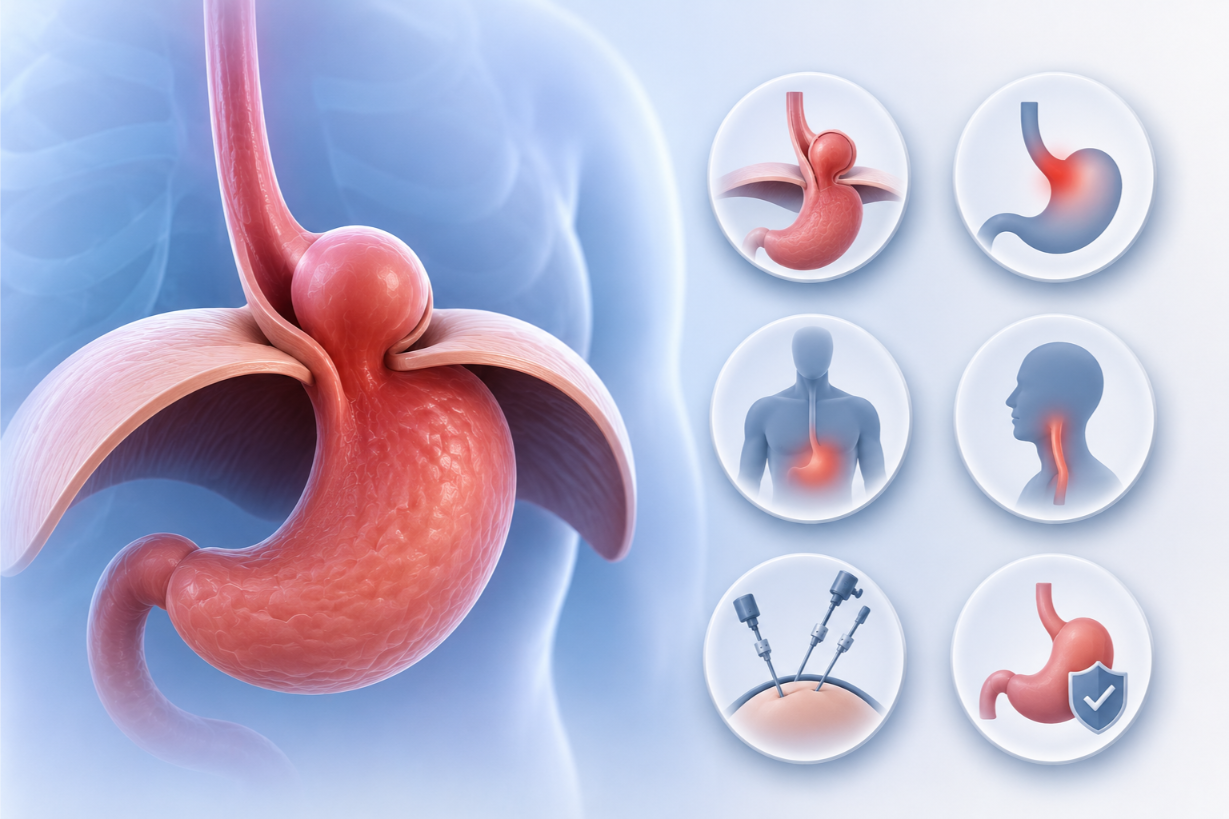
Hiatal Hernia
A hiatal hernia occurs when part of the stomach protrudes through the diaphragmatic hiatus into the chest. It may be associated with gastroesophageal reflux, as the hernia can impair the function of the lower esophageal sphincter and facilitate the reflux of gastric contents into the esophagus.
Symptoms vary depending on the type and size of the hernia and may include heartburn, acid or food regurgitation, upper abdominal or chest discomfort, difficulty swallowing, and early fullness after meals. Some hiatal hernias may cause few or no noticeable symptoms.
Treatment is determined according to the type and size of the hernia, severity of symptoms, and the presence of associated reflux or complications. When surgical treatment is indicated, Laparoscopic Hiatal Hernia Repair may be performed to restore the stomach to its normal anatomical position and repair the diaphragmatic hiatus. An anti-reflux procedure may also be performed when clinically appropriate.
The laparoscopic approach uses small incisions and is generally associated with less postoperative discomfort and faster recovery compared with conventional open surgery.
Send Message