Gastroesophageal Reflux Disease (GERD)
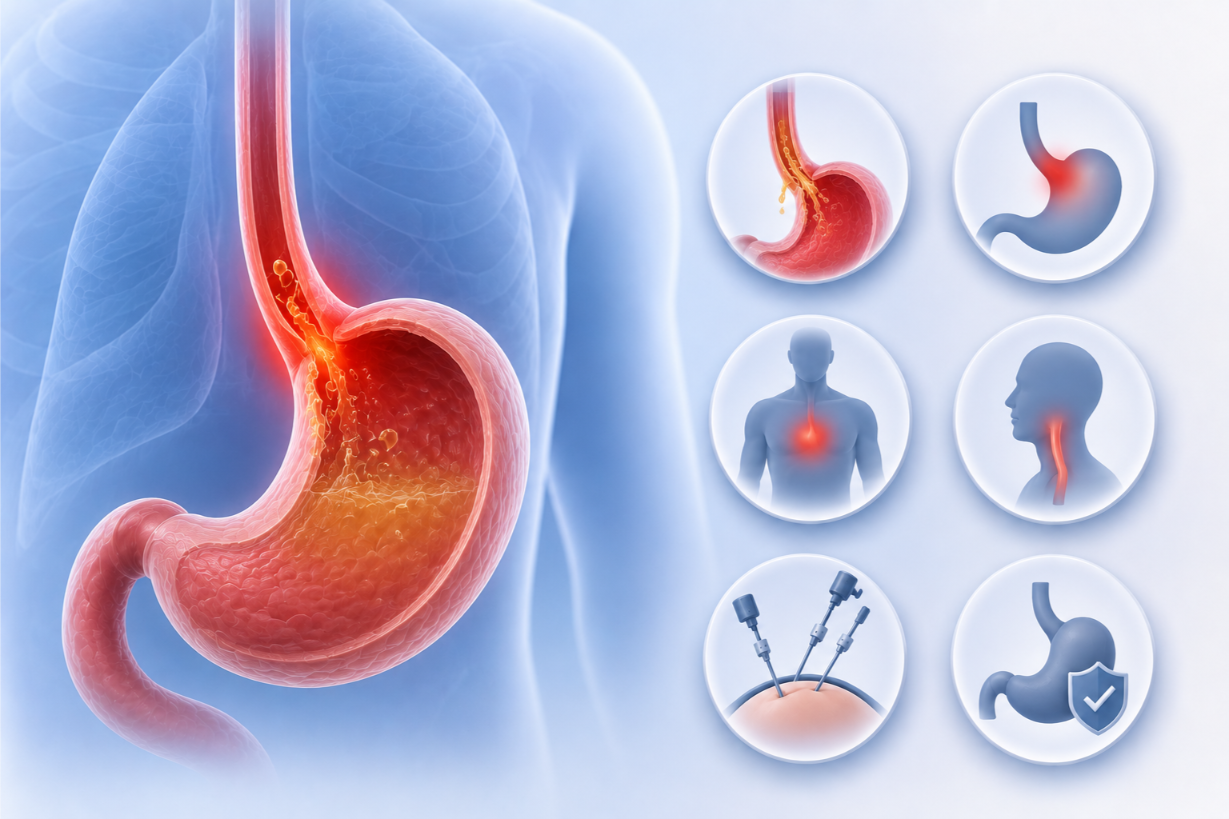
Gastroesophageal Reflux Disease (GERD) is a condition in which stomach contents and gastric acid repeatedly flow back into the esophagus, commonly due to dysfunction of the lower esophageal sphincter. Patients may experience heartburn, acid regurgitation, chest discomfort, swallowing difficulties, and, in some cases, respiratory or throat-related symptoms.
A comprehensive assessment is performed to determine the severity and underlying cause of reflux and to select the most appropriate treatment approach for each patient. When symptoms persist despite medical therapy and lifestyle modifications, or when GERD is associated with complications or a hiatal hernia, laparoscopic anti-reflux surgery may be considered.
Laparoscopic anti-reflux surgery aims to restore the natural barrier between the stomach and esophagus and reduce reflux of gastric contents. The minimally invasive approach uses small incisions and is generally associated with less postoperative discomfort and a faster recovery compared with conventional open surgery.
Send Message